

This review discusses major story themes and plot points from Toy Story 5.
As an emotional kid, the Toy Story films always got me.
I remember feeling genuinely sad for the toys whenever they weren’t being played with. Sitting on a shelf. Waiting for their kid. Wondering if they still mattered.
Toy Story 5 taps into that same feeling, but updates it for 2026.
This time the threat isn’t another toy.
It’s technology.
Movie Trailer
Toy Story 5 - Official Trailer
Childhood Has Changed
Bonnie is still very much a kid. That’s what makes the story work.
She’s not trying to grow up. If anything, the world around her is pushing her there faster than she might otherwise go.
The film opens with Bonnie’s parents debating whether to buy her a tablet. They’re nervous about it, but they’re also worried about her missing out. Bonnie is struggling to make friends because she’s one of the only kids still playing with toys while everyone else is connected online.
When she finally receives her Lily Pad, her parents start with good intentions. She gets a day of unrestricted use to learn how to use it before screen-time restrictions are supposed to begin.
Like many good intentions, those rules quickly become harder to enforce than expected.
By the next morning, she’s reaching for it before anything else.
It’s a small moment, but one that immediately feels familiar.
The film isn’t really criticising Bonnie’s parents. If anything, it acknowledges how difficult modern parenting has become. Nobody wants their child glued to a screen. Nobody wants them left behind either.
The film also touches on some of the less obvious challenges that come with kids being constantly connected.
Bonnie becomes upset after reading messages in a group chat where some low-level cyberbullying is taking place. Rather than immediately taking the device away or demanding answers, Bonnie’s mum calmly asks her to show her what’s happened and reassures her that she’s not in trouble.
It’s a brief scene, but one that felt refreshingly realistic. The film acknowledges that technology isn’t going away, so the answer isn’t simply removing it. It’s about helping kids navigate it.
The Forgotten Devices
The most emotional part of the movie for me wasn’t one of the toys.
It was the old technology.
While searching for Bonnie, Jessie discovers a collection of forgotten devices hidden away in a drawer with dead batteries. After bringing them back to life, she meets Smarty Pants, Snappy and Atlas.
Unlike the toys, they don’t even realise they’ve been abandoned.
Their batteries died and that was it.
One of them describes the last thing he remembers seeing before shutting down: a collection of photos followed by a spinning rainbow loading icon. The next thing he knows, Jessie is installing fresh batteries years later.
It’s funny, but also surprisingly sad.
When Jessie asks how long they spent with their kids, the answers range from just three to six months.
They weren’t loved and outgrown.
They were simply replaced.
The toys miss being played with.
The devices miss being useful.
It’s a subtle juxtaposition that sits at the heart of the film.
One longs for connection.
The other longs for purpose.
That distinction stuck with me long after the credits rolled.
Another moment that stayed with me comes when the devices describe Bonnie as “9.5” years old.
Not nine. Not ten.
9.5.
It sounds like the way a gadget might describe another gadget. A tiny joke, but one that perfectly captures how differently the devices view the world compared to the toys.
It’s Not Toys vs Tech
The marketing positions the film as a battle between toys and technology.
That’s only half the story.
At first, Lily Pad feels like the villain. Bonnie becomes obsessed with staying connected. She worries about missing games, missing jokes and missing whatever happened while she was offline.
The toys see Lily Pad as the problem.
Lily Pad sees the toys as outdated.
But neither side is actually trying to hurt Bonnie.
They’re both trying to help her.
One of the recurring ideas throughout the film is that Bonnie isn’t like everyone else. The toys keep reminding Lily Pad that a one-size-fits-all solution doesn’t work.
Eventually Lily Pad realises that despite her good intentions, she’s been causing Bonnie as much stress as happiness.
By the end, even Jessie understands that technology isn’t the enemy.
It’s just another part of Bonnie’s life.
That idea is summed up perfectly when Woody says of Lily Pad:
“She’s one of us. Deal with it.”
It’s a surprisingly mature conclusion.
Final Thoughts
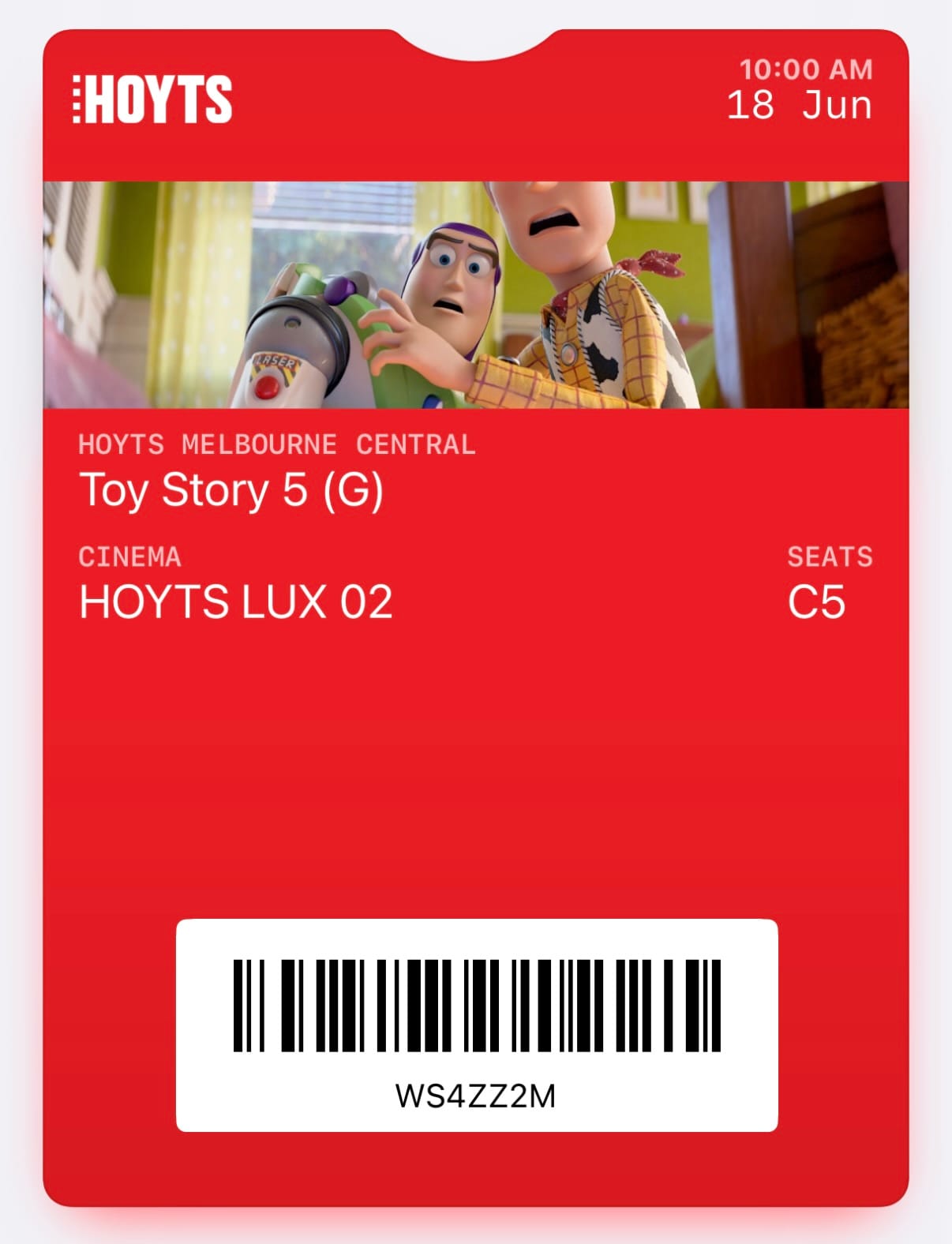
I watched Toy Story 5 at a 10am screening filled almost entirely with adults. Which somehow felt appropriate.
The original Toy Story was about toys competing for a child’s attention.
Thirty years later, the competition looks very different.
Bonnie isn’t choosing between Woody and Buzz. She’s trying to navigate a world of group chats, social pressure, online friendships and constant connectivity. Meanwhile, Jessie is left wondering whether there’s still a place for toys in a childhood increasingly shaped by screens.
The marketing presents the film as a battle between toys and technology.
The movie itself is much more interested in what happens when the two learn to coexist.
The toys help Bonnie imagine.
Technology helps Bonnie connect.
The problem isn’t either one on its own. It’s when one begins to replace the other.
Sitting in a cinema full of adults, it struck me that many of us have grown up alongside these characters. The original Toy Story was released in 1995, and many of the children who grew up with Woody and Buzz are now adults navigating these same questions in their own lives.
In that sense, Toy Story 5 feels like it has grown up alongside its audience.
The film doesn’t just explore technology from a child’s perspective. It also spends time examining the challenges faced by parents. Bonnie’s mum and dad aren’t portrayed as careless or out of touch. They’re trying to answer the same question many families are asking today: how do you embrace technology without letting it take over?
By showing the issue through Bonnie, the toys, the devices and the parents, the film avoids easy answers. Instead, it presents technology as something that can help, harm and connect, often at the same time.
Despite the bigger themes, Toy Story 5 never forgets to be fun. There are plenty of laughs throughout, and Jessie proves she’s more than capable of carrying a Toy Story film. The movie spends a lot of time talking about technology, but it never feels like a lecture. Its ideas are woven naturally into the story, allowing the audience to arrive at their own conclusions alongside the characters.
Underneath all the jokes, talking gadgets and adventure sequences, Toy Story 5 is exploring a question many families are already grappling with today:
How do we find a healthy balance between technology and real life?
That’s what stayed with me long after the credits rolled.
Toy Story 5 isn’t really about toys versus tech.
It’s about balance.
Don’t rush out when the credits start rolling. Stay for the full song and you’ll be rewarded with one last scene before the lights come up.
Want Your Own Lilypad?
Belkin has actually released an officially licensed Disney Pixar Toy Story Lilypad iPad Case.
Compatible with iPad A16 (11th Gen, 2025) and iPad 10th Gen (2022).